


Forehead Lift
A forehead lift or a “brow lift” is a procedure that corrects drooping brows, hooding of the upper lids and it can improve the horizontal lines or furrows that can make a person look tired, sad or angry. It restores a more refreshed and youthful look to the area located above the eyes.
The tissues and muscles that cause the drooping or furrowing are altered or removed to raise the eyebrows, smooth the forehead and minimize frown lines. The procedure can be done by using one of several methods. The most modern method of brow correction is with an endoscope in which minimal incisions are made from which tiny dissolvable plates are placed to hold the brow in it’s more refreshed location. An older method is done by placing the incision just behind the hairline where it is hidden, but brings the hairline back. Or, it can be performed using an incision in front of the hairline which allows for bringing the hairline forward as well as brow elevation. A browpexy is a technique which is performed through an upper eyelid incision, this has limitations in it’s application.
Click here to see select before and after photos of Brow Lift / Forehead Lift.
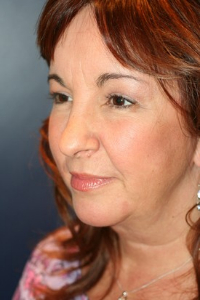
Before
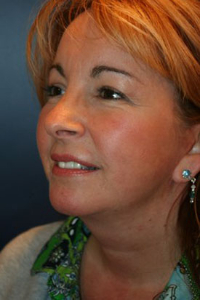
After
*Results May Vary
Who are the best candidates for a forehead/brow lift?
Forehead lifts are most commonly performed on patients between the ages of 40-60 to minimize the effects of hooding of the brows, aging from brow ptosis, excess skin, receding hair line and severe wrinkles. However, it can help those of any age who have developed frown lines or furrows due to muscle activity or stress. Those who are born with furrowed lines above the nose or a heavy brown can achieve a refreshed and more alert look with this procedure.
This procedure is usually performed along with a face lift to smoothen the overall appearance of the face. It can also be performed at the same time as Eyelid surgery (blepharoplasty), if a patient has significant overhanging skin in the upper eyelids. Often, those who feel they need an upper-eyelid surgery will find that a forehead lift can better meet their surgical goals.
Even if you are bald, have a receding hairline, or have had upper-eyelid surgery before, you may still be a good candidate for a forehead lift. Dr. Weinstein will just perform a more conservative operation or simply alter the location of the incision.
Those who are interested in receiving a forehead lift should discuss their expectations in detail with their doctor.
The potential risks involved with a forehead/brow lift
Complications are usually minor and rare when a qualified plastic surgeon performs the forehead lift. However, like any surgery, there are some risks that should be considered:
- Loss of ability to wrinkle your forehead or raise the eyebrows. This happens because the nerves that control eyebrow movement can be injured on either one or both sides. This is very rare, and an additional surgery may correct the problem.
- Broad scar formation. This occurs because wide scar tissue is formed and can be corrected by removing it so that a thinner scar can replace it.
- Hair loss along the scar edges
- Loss of sensation behind the incision line. This is usually temporary, but could on a rare occasion be long-lasting.
- Infection and bleeding
- If a complication occurs during an endoscopic forehead lift, that approach may have to be abandoned, and Dr. Weinstein may have to switch to the conventional procedure. This may result in longer recovery period and a longer incision. However, these complications are extremely rare.
Dr. Weinstein will provide you with instructions before and after surgery to help reduce your risk for complications.
What happens in the initial consultation for a forehead/brow lift?
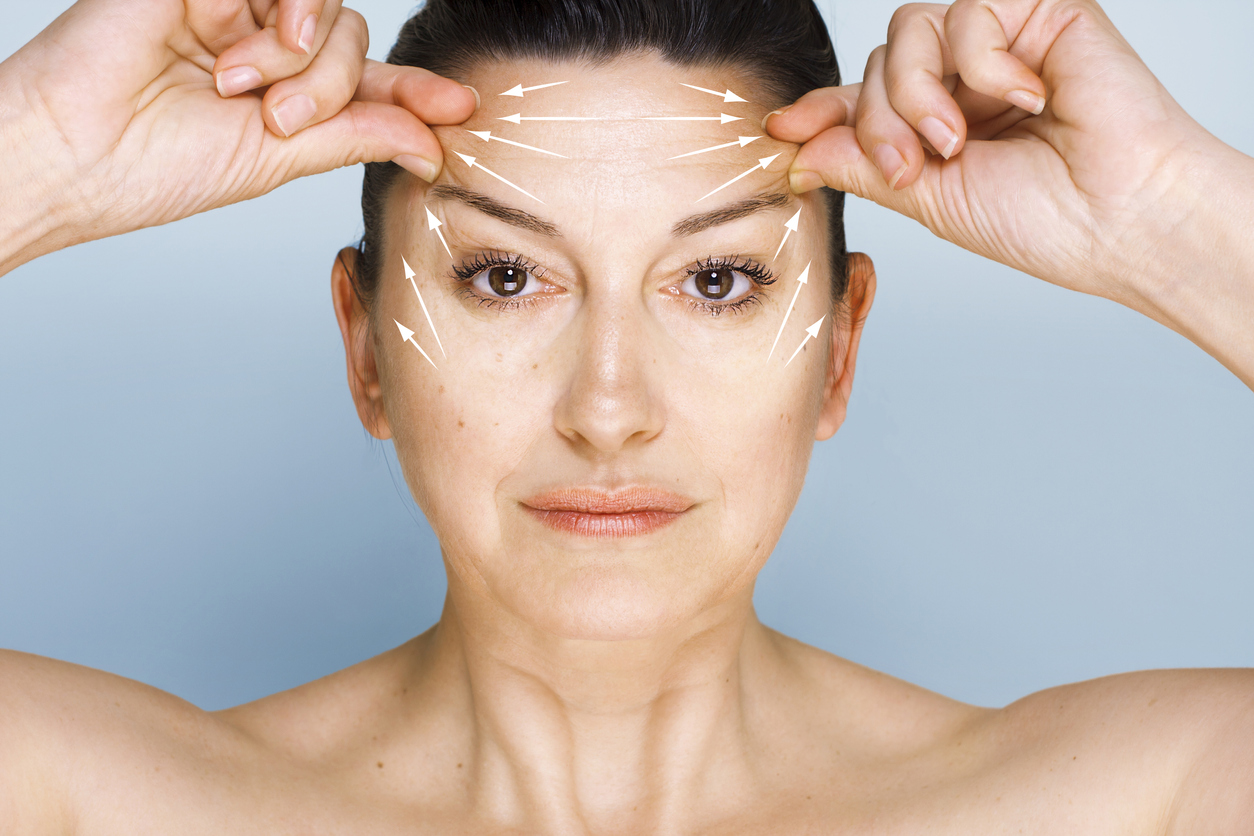 In the initial consultation, the Dr. Weinstein will evaluate your face, including the underlying bone and skin.
He will then discuss your goals for the procedure and ask about the any medical conditions that you may have that could possibly cause problems during or after the procedure. Some medical conditions that could that could cause problems are blood-clotting problems, uncontrolled high blood pressure, or if you have the tendency to develop large scars. Make sure that you tell your doctor if you have already had facial surgery, if you take any drugs or medications (including aspirin or other drugs that may affect clotting, or if you smoke.
If you want to proceed with a forehead/brow lift, Dr. Weinstein will explain to you the surgical technique, the type of facility the procedure will be performed, the recommended type of anesthesia, and the costs and risks involved. Feel free to ask your doctor any questions that you may have.
How you can prepare for a forehead/brow lift surgery with Dr. Weinstein
You will be given specific instructions on how to prepare for surgery, including guidance on eating, drinking, smoking, and what medications or vitamins to avoid. By following these instructions, the surgery and your recovery will be smoother.
You may wish to grow your hair out before surgery if you have very short hair. That way, your hair will be long enough to hide your wounds as they heal.
You should arrange for someone to drive you home from the surgery and stay with you for a day or two.
Patient Testimonial
“Dr. Weinstein and his wife treated me with so much care and respect when I went for my minor surgery (before and after). I was in excruciating pain I called the Doctor and I was seen and taken cares of that same day. I am so glad I found this amazing plastic surgeon and the location is super close to my house and convenient for any emergencies. The receptionist is super sweet and very helpful. I definitely recommend this place if you want amazing customer service and great work done. Thank you so much!! ????”
The forehead/brow lift Surgery
Dr. Weinstein performs Forehead lifts usually on an outpatient basis, at the Chester Surgery Center or Morristown Medical center.
They are usually performed under local anesthesia, with a sedative to make you feel drowsy. You will be awake but insensitive to pain, and relaxed.
If your prefers to use general anesthesia, that you will be asleep through the entire operation and have your procedure at Morristown medical center.
To best achieve your cosmetic goals, Dr. Weinstein will help you determine which approach to use: the anterior hairline approach, the endoscopic forehead lift, Browpexy or the “open” or classic method. Be sure you understand which technique he recommends and why he feels it will best suit your needs.
Most forehead/brow lifts are done with two small incisions above or at the hairline. The incisions are inconspicuous and the lift is maintained using dissolvable Endotines.
The ENDOTINE Forehead device is made to help reduce areas of high stress and distribute tension, giving Dr. Weinstein better aesthetic control of your brow shape and height. These small incisions are rarely visible and closed with fine sutures. The endotines will dissolve over six months and form scar tissue to help maintain the lift.
Dr. Weinstein rarely uses the old, or classic technique. In that technique: before surgery, your hair will be tied with rubber bands on each side of the incision line. Your head is not shaved, but hair that is growing in front of the incision line will be greased back with ointment.
Rarely, a coronal incision will be used. This follows a headphone-like pattern which starts at your ear level, then runs across the top of the forehead to the other side of your head. The incision will not be visible as it is made behind the hairline.
If your hair is receding or your hairline is high, the incision may be placed right at the hairline, to avoid adding more height to your forehead. Those who are bald or losing hair will have a mid-scalp incision that follows the pattern of skull bones.
Working through the site of the incision, the forehead skin is lifted carefully so the underlying tissue can be removed. Then the muscles of the forehead can be released or altered. Your eyebrows may be elevated and the excess skin will be trimmed to create a more youthful and smoother appearance.
Then, the incision is closed with clips or stitches. Your hair and face are washed to help prevent irritation. Dr. Weinstein will cover your incision with gauze and then wrap your head with an elastic bandage.
What happens after forehead/brow lift surgery?
Forehead lift patients may experience mild swelling, incision discomfort and some numbness.
The pain at the incision site is usually minimal and can be controlled with pain medication if necessary. Those who have an Endoscopic forehead lift usually experience less itching sensation than those who have a classic forehead lift.
The staples or stitches used to close the incisions will usually be removed within a 7 to 10 days.
You will be able to be up and about after a day or two, but you should plan on taking it easy for the first week of surgery. You will be able to shampoo your hair and shower within two days, or once your bandages are removed.
After ten days, most patients are back to work and school. However, vigorous activities should be avoided for several weeks. You should also avoid prolonged exposure to the sun or heat for several months.
After about three weeks, most of your visible signs of surgery should completely fade. There may be minor bruising and swelling, but this can be concealed with makeup.
Your New Look
 You will have a younger and more rested look. Most patients are very pleased with their results. Although it does not stop the clock, a forehead lift can minimize the appearance of aging for years.
Schedule a Client Consultation
If you are interested in learning more about Forehead lifts, please contact our office by calling 908-879-2222. Contact us today!
Request A Consultation





Office Hours
Monday: 9am-6:30pmThursday: 9am-5:30pm
To make an appointment 9-5 everyday.
Please email us for an appointment 24/7 or call our office and leave a message for our staff that will be returned the next business day.
Phone: 908-879-2222
Holiday Hours
Closed: Labor Day
Closed: Memorial Day